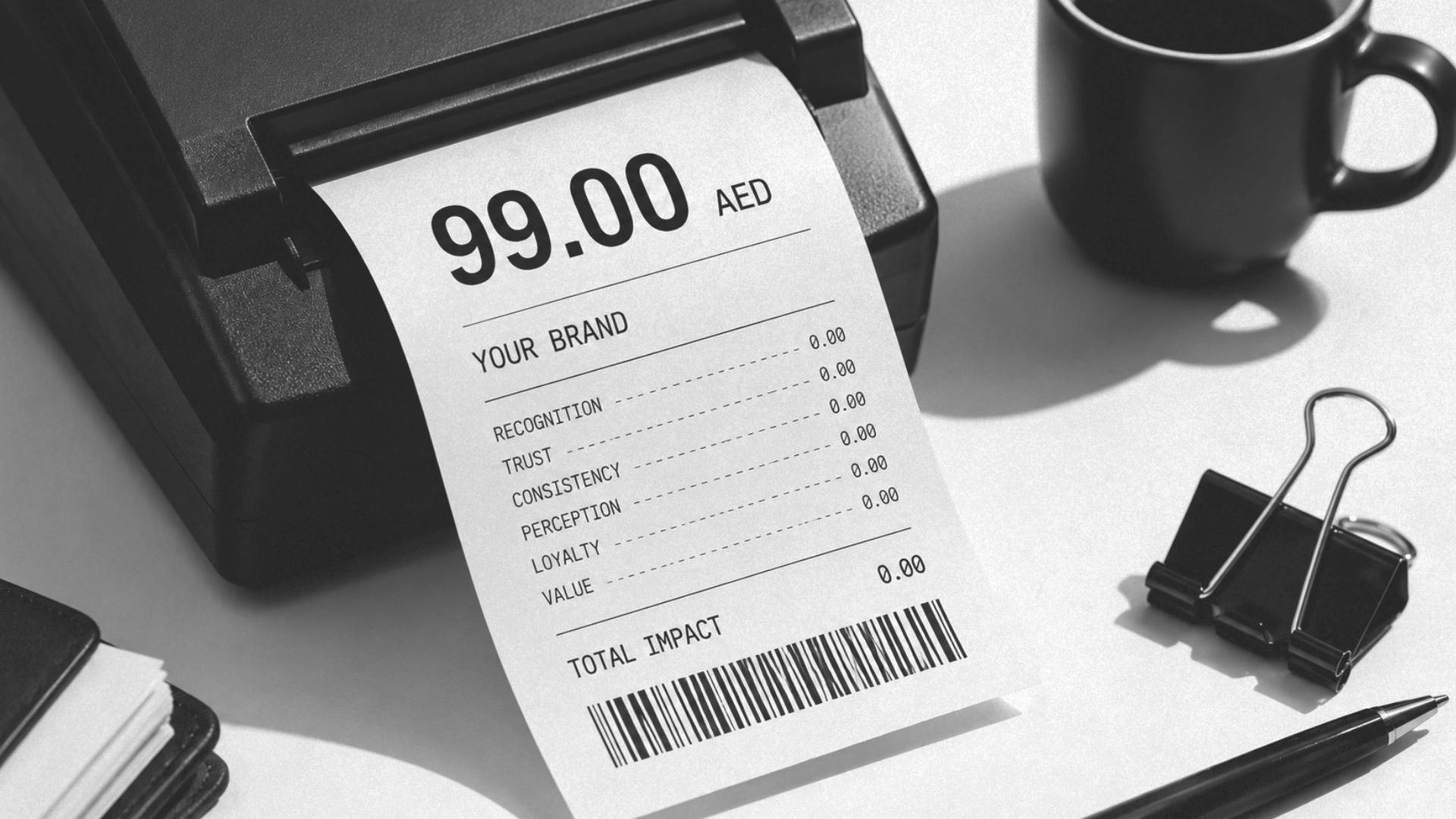
Why Misaligned Teams Are Costing You Growth
When your customer service agent in Dubai promises something your sales rep in Riyadh can’t deliver, it’s not just a bad day — it’s a brand failure. And brand failures cost money.
A Gallup study shows that companies with engaged, aligned employees see 21% higher profitability than those with disengaged teams. Deloitte reports that brands with strong internal cultures are 4x more likely to be recognized as market leaders.
Yet, across the GCC, we see companies pouring millions into marketing automation UAE campaigns, new visual identities, and glossy brand launches — only to see it all fall flat because their people aren’t living the brand.
Here’s the truth: you can’t buy alignment with advertising spend. If your employees don’t embody the brand, your marketing is wasted.
And in competitive hubs like Dubai, Abu Dhabi, and Riyadh, where customers are spoilt for choice and global players are setting the pace, internal brand alignment isn’t optional. It’s the difference between scaling as a leader or stalling in mediocrity.
The Problem: When Teams Don’t Live the Brand
We hear it all the time from CEOs and CMOs:
“We’ve invested in branding. Why don’t our employees sound like us?”
Here are the common failure points:
- Employees not embodying the brand. The sales deck says “premium partner.” The frontline experience feels rushed and transactional. Trust breaks instantly.
- Inconsistent tone across markets. A Dubai HQ runs sleek campaigns with a polished message. Meanwhile, the branch in Doha uses off-brand visuals and casual messaging. Customers wonder if it’s the same company.
- Weak adoption of mission and values. Leadership talks purpose, but employees see no connection to their daily work. The result: disengagement.
Add UAE/GCC complexity into the mix:
- Multinational teams. A single Dubai office may have 15+ nationalities. Without a unifying brand culture, misinterpretations multiply.
- Cultural nuance. What resonates with Saudi consumers may not resonate in the UAE. If teams don’t understand this, campaigns fall flat.
- High growth pressure. Scale-ups in Riyadh or Dubai often expand so fast that internal culture can’t keep up. That’s when cracks appear.
The result: external inconsistency. Customers get mixed messages. Service levels fluctuate. Promises made in campaigns don’t match delivery. The brand weakens — and competitors gain ground.
The Illustrado Perspective: Why Alignment Is Strategic
At Illustrado, we don’t see internal brand alignment as an HR initiative. We see it as business strategy.
Because alignment = growth.
When employees are aligned:
- Customers experience consistency.
- Teams work with clarity and efficiency.
- Trust is reinforced at every touchpoint.
And trust drives sales.
“AI can automate execution. But only people can embody the brand,” says Lalaine Chu-Benitez, Managing Director at Illustrado. “If your team isn’t aligned, your external campaigns are a house of cards.”
Alignment means that every employee — from the call center agent in Sharjah to the regional GM in Riyadh — knows the brand’s mission, understands its values, and reflects them in their actions.
That’s not cosmetic. That’s competitive advantage.
And in our experience: branding is how you scale. You don’t scale through advertising alone. You scale when your people deliver the brand consistently, day after day, market after market.
The Solution: A Practical Framework for Internal Brand Alignment
So how do ambitious brands in the UAE, GCC, and MENA align their teams around the brand?
At Illustrado, we use a structured framework:
1. Workshops That Build Understanding
Alignment starts with clarity. We run facilitated workshops that translate mission, vision, and values into language employees understand.
Example: A Dubai-based tech scale-up wanted to reposition as a premium partner. Their values were buried in a PDF. We brought leadership and teams together, unpacked what “premium” means in daily behavior, and co-created guidelines. Employees left with practical clarity: how to write an email, how to present to clients, how to handle objections — all aligned to brand promise.
2. Departmental Adoption
Every department has a role in delivering the brand. Finance? It’s about clarity and professionalism in communication. Operations? Reliability and trust. Marketing? Consistency in tone and messaging.
We help teams translate brand values into departmental standards. The result: everyone knows how they contribute to the brand story.
3. Policies That Reinforce Alignment
Alignment needs structure. That means codifying standards in policies, playbooks, and guidelines. Not as corporate fluff, but as actionable references that shape decisions.
For example, a UAE hospitality group integrated brand values into HR policies — from recruitment to onboarding to performance reviews. This ensured new hires weren’t just skilled, but culturally aligned.
4. Feedback Loops & Health Checks
Alignment isn’t “one and done.” Teams evolve. Markets shift. That’s why we build feedback mechanisms: regular surveys, focus groups, alignment scorecards.
These act as brand “health checks.” Leadership gets visibility into where alignment is strong and where it’s slipping. Adjustments can be made before cracks become crises.
The Business Impact of Alignment
When teams align, you don’t just get better internal morale. You get measurable business results:
- Consistency = trust. A consistent experience across UAE, KSA, and Qatar builds credibility. Customers know what to expect.
- Efficiency = growth. When teams know the brand promise, decision-making speeds up. Less confusion. Fewer contradictions.
- Engagement = retention. Gallup data shows engaged employees are 87% less likely to leave. In high-turnover markets like retail and hospitality, that saves millions.
- Clarity = premium pricing. Strong alignment helps justify premium positioning. Think Emirates: every touchpoint — from check-in to cabin crew — reflects the same premium brand. That alignment allows them to command higher prices.
This is why we tell clients: internal brand alignment isn’t an expense. It’s an investment in growth.
The Future Outlook: Alignment in an AI World
As AI reshapes marketing, internal alignment becomes even more critical.
Why? Because AI can automate tasks — but it can’t replace human authenticity.
- AI can write a script. But it’s your frontline employee who delivers it with empathy.
- AI can predict churn. But it’s your account manager who wins trust back.
- AI can generate campaigns. But it’s your team who embodies them consistently.
In the UAE, where governments are pushing hard on AI adoption as part of digital transformation in the Middle East, the real differentiator won’t be which company has the best tech stack. It will be which company has teams that embody trust, culture, and brand values in every interaction.
As markets saturate with AI-driven noise, human alignment will stand out.
Align Your Teams, Scale Your Brand
If you’re a CEO, CMO, or founder in the GCC, ask yourself:
- Do my employees know and believe in our brand promise?
- Is our customer experience consistent across markets?
- Are we losing trust because our internal culture doesn’t match our external campaigns?
If the answer is shaky, it’s time to fix it.
At Illustrado, we partner with ambitious companies to align their teams from the inside out. Our Internal Brand Alignment services turn employees into brand ambassadors — ensuring that every touchpoint reinforces trust, consistency, and growth.
👉 Book a Brand Discovery Call with Illustrado to assess your alignment gaps.
👉 Subscribe to our newsletter for insights on marketing trends UAE, digital transformation in the Middle East, and brand strategy UAE.
In the end, your people are your brand. And when they’re aligned, growth follows.